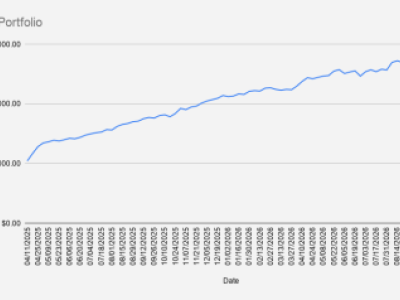
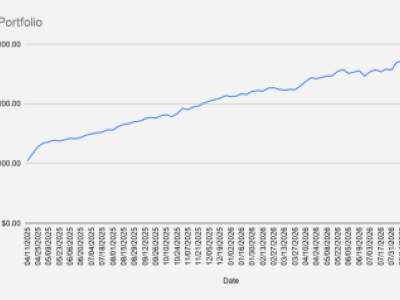
As of February 27, 2026, the portfolio closed at $11,343, gaining a modest 0.27% during the week.
The year-to-date return now stands at 7.29%.
This was NVIDIA earnings week, and as expected, NVDA had an outsized influence on both the portfolio and the broader market.
Earnings weeks can create attractive opportunities for options sellers because implied volatility usually rises and option premiums become more expensive. However, the same volatility also increases the risk of rapid losses, assignment, and difficult trade adjustments.
Rolling the NVDA Covered Call Up and Out
Earlier in the week, I decided to proactively roll the existing NVIDIA covered call.
The previous position was:
- NVDA June 2026 $116 Covered Call
The adjusted position became:
- NVDA Nov 20, 2026 $120 Covered Call
The main reason for making the adjustment was assignment risk.
If NVIDIA had rallied sharply following earnings, the June $116 call could have moved deeper in the money and become increasingly difficult or expensive to manage.
By rolling the covered call up and out, I extended the duration of the trade while increasing the strike price from $116 to $120.
The adjustment added approximately $560 in additional potential income over the following nine months. This included roughly $160 in premium received from the roll itself.
Extending the trade until November is not without disadvantages. The position will remain open for considerably longer, and the covered call will continue limiting the potential upside from the underlying NVIDIA shares.
This is the central trade-off when using covered calls. The strategy generates income and can provide limited downside protection, but it also caps gains if the stock rallies significantly above the strike price.
Why Strong Earnings Can Still Lead to a Stock Drop
NVIDIA's earnings results were objectively strong, yet the stock declined following the report.
While this may appear contradictory, it is not unusual.
Markets do not react only to whether a company reports good or bad numbers. Stock prices are also influenced by expectations, valuation, market positioning, forward guidance, and investor sentiment.
When expectations are already extremely high, even strong financial results may not be enough to push the stock higher immediately.
Investors may also use a positive earnings announcement as an opportunity to take profits, particularly after a strong rally leading into the report.
For options sellers, earnings reactions can be particularly difficult to predict. A stock can rise sharply, decline despite strong results, or remain relatively flat while implied volatility collapses.
AI Sentiment and Competitive Risk
A larger structural risk for NVIDIA remains changing investor sentiment toward artificial intelligence companies.
Last year, concerns related to DeepSeek briefly pushed NVDA below $100 before the stock recovered.
That episode provided a useful reminder that even a dominant company can experience a violent drawdown when investors begin questioning growth assumptions, competitive advantages, or future demand.
NVIDIA remains one of the strongest companies in the semiconductor industry, but that does not make the stock immune to valuation compression, competition, or sudden changes in market sentiment.
For this reason, I continue to prefer defined-risk bull put credit spreads rather than relying exclusively on uncovered put selling.
Defined-risk spreads limit the maximum potential loss through the purchase of a protective put. However, they still require careful position sizing and active management when the underlying stock moves against the trade.
Current Options Positions
- NVDA Mar 6, 2026 167.5/160 Bull Put Credit Spread
- 2x BMY Mar 20, 2026 50/46 Bull Put Credit Spread
- PFE Mar 13, 2026 26 Cash-Secured Put
- NVDA Nov 20, 2026 $120 Covered Call
The portfolio currently combines covered calls, bull put credit spreads, and cash-secured puts.
Each strategy serves a slightly different purpose.
Covered calls generate premium against shares already owned. Cash-secured puts may generate income while creating the possibility of acquiring shares at a lower effective cost. Bull put credit spreads provide defined-risk exposure while requiring less capital than cash-secured puts.
This Week's Trades
This week, I executed two main options trades:
- Rolled the NVDA covered call up and out to November
- Sold a weekly NVDA bull put credit spread
Total options premium collected during the week was approximately $223.
This was the highest weekly premium generated by the portfolio so far, exceeding the previous record of $167 collected in November.
However, this should not be viewed as a normal or sustainable weekly result.
A large portion of the premium came from the longer-dated covered call roll. Earnings-related volatility also increased the value of NVIDIA options during the week.
In more typical market conditions, the portfolio should be expected to generate considerably less weekly premium.
Reinvesting Premium Into NVDA Shares
Using part of this week's options income, I purchased another 0.1 shares of NVDA.
The approach remains consistent: use options premium not only as short-term income, but also as a way to gradually increase ownership of the underlying companies.
The individual fractional-share purchases are small. However, repeated purchases can compound into a meaningful position over time.
This creates two potential sources of portfolio growth: income from selling options and long-term appreciation from the accumulated shares.
The strategy is not risk-free. If NVIDIA declines significantly, the value of both the shares and the options-related positions could fall at the same time.
Margin Debt Update
One of the portfolio's primary objectives remains reducing margin debt while maintaining ownership of at least 100 NVIDIA shares.
Current margin debt stands at approximately -$3,739.
At a sustained premium rate of $223 per week, the margin balance could theoretically be eliminated in approximately 17 weeks.
However, that calculation is highly optimistic because this week's premium was unusually high.
Weekly options income will fluctuate depending on volatility, available buying power, market conditions, trade duration, and the amount of risk taken.
It would therefore be misleading to assume that $223 can be collected every week without increasing risk or tying up additional capital.
The broader goal remains to reduce and ideally eliminate margin debt during 2026 without selling the core NVIDIA position.
Whether that can be achieved will depend on future premium income, stock performance, interest costs, and trade management decisions.
Looking Ahead
The main position to watch next week is:
- NVDA Mar 6, 2026 167.5/160 Bull Put Credit Spread
The position will remain sensitive to any further weakness in NVIDIA shares.
If this or another position comes under pressure, the management plan remains unchanged:
- Consider rolling the position forward when appropriate
- Prefer collecting additional credit when market pricing allows it
- Prioritize long-term portfolio stability over short-term premium
Rolling is not automatically the correct decision in every situation. Before adjusting a position, it is important to consider whether the original trade thesis remains valid, how much risk remains, and whether extending the trade is justified.
Bottom Line
The portfolio gained 0.27% during the week, closing at $11,343 and bringing the year-to-date return to 7.29%.
The main portfolio adjustment was rolling the NVIDIA covered call from the June 2026 $116 strike to the November 2026 $120 strike.
The roll reduced near-term assignment pressure, increased the strike price, and added approximately $560 in potential income. However, it also extended the duration of the position and continued to limit the upside potential of the underlying shares.
The portfolio generated approximately $223 in options premium, the highest weekly amount recorded so far. Part of this income was reinvested into an additional 0.1 shares of NVIDIA.
This week demonstrated both the opportunity and risk of selling options around earnings. Elevated volatility can produce attractive premiums, but it also increases the probability of large price movements and difficult adjustments.
Options income remains useful only when it is supported by disciplined position sizing, realistic expectations, and consistent risk management.
Disclaimer
This trade journal reflects personal portfolio activity and is provided for educational and informational purposes only. It should not be considered investment advice, financial advice, tax advice, or a recommendation to buy or sell any security, option, derivative, or financial instrument. Options trading involves risk and may not be suitable for all investors. Past performance does not guarantee future results.