Portfolio Value: $11,880
Weekly Change: +3.38%
YTD Return: +13.69%
Options Premium Collected: $55
Greetings from Riga International Airport.
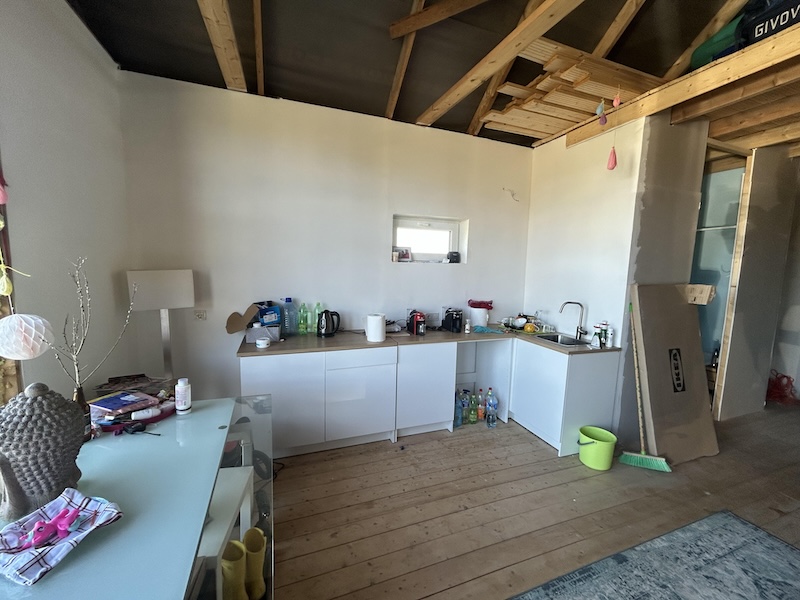
I'm writing this update while waiting for a flight to Berlin after spending a productive week in Latvia working on our family frame house. Most of my attention was far away from the stock market. I nearly finished installing the kitchen cabinets, while my better half planted more than 40 peonies in the garden. Our daughter enjoyed every minute of it.
Back to the portfolio.
As of April 10, 2026, the options income portfolio increased by +3.38%, closing at $11,880.
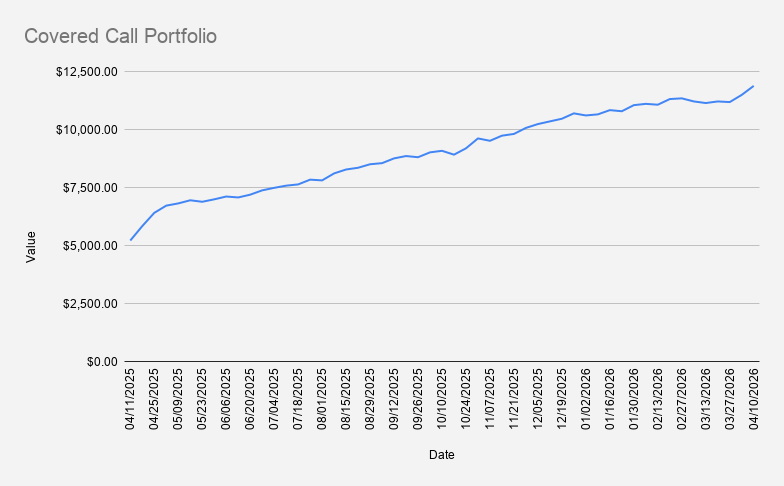
On a year-to-date basis, the portfolio is up 13.69%, outperforming both the S&P 500 (-0.28%) and NVIDIA (+0.39%) over the same period.
Market Environment and NVDA Recovery
This week was dominated by geopolitical headlines surrounding the Strait of Hormuz and continued uncertainty in the Middle East. Markets reacted to changing expectations around trade routes, energy prices, and global economic growth.
On the positive side for the portfolio, the U.S. dollar weakened against the euro, providing a modest currency tailwind.
NVIDIA (NVDA) also recovered above the $180 level, helping support overall portfolio performance.
As a seller of options premium, I generally prefer stability over extreme volatility. A steady recovery in a quality company such as NVDA can create favorable conditions for income-generating strategies, including bull put spreads.
Current Options Positions
- NVDA Apr 17, 2026 177.5/167.5 Bull Put Credit Spread
- 2x BMY Jun 18, 2026 50/46 Bull Put Credit Spread
- PFE May 15, 2026 25 Cash-Secured Put
- NVDA Nov 20, 2026 $120 Covered Call
The portfolio continues to rely on a combination of credit spreads, cash-secured puts, and covered calls to generate recurring premium income.
Why I Continue Using Credit Spreads
One of the main reasons I increasingly favor bull put spreads is capital efficiency.
Compared with cash-secured puts, credit spreads allow me to define the maximum risk while using significantly less buying power. This is especially important when managing a relatively small portfolio and trying to avoid concentrating too much capital in a single position.
Cash-secured puts remain useful when I am comfortable acquiring the underlying shares. However, they require enough available capital to accept assignment, which can limit the number of positions the portfolio can carry.
Credit spreads preserve more capital for other opportunities, although the reduced capital requirement should not be confused with reduced risk. A sharp move in the underlying stock can still produce a substantial loss relative to the amount of capital committed.
Reinvesting Premium Into Shares
Using premium collected from NVDA credit spreads, I added:
- 0.1 shares of NVDA
- 0.5 shares of PFE
This remains one of the core principles behind the portfolio.
Rather than withdrawing all options income, part of the proceeds is reinvested into productive assets. Over time, these small additions can gradually increase the value of the portfolio and its future dividend income.
The individual purchases may appear insignificant, but repeated consistently over many months, they can meaningfully increase long-term ownership.
Weekly Premium Income and Margin Debt
This week generated approximately $55 in options premium income.
A key objective remains reducing margin debt while maintaining a core position of at least 100 NVDA shares.
Current margin debt stands at approximately -$3,468.
At a sustained pace of $55 per week, it would theoretically take around 63 weeks to eliminate the margin balance, assuming no interest costs, new borrowing, withdrawals, or changes in the weekly premium collected.
While my original goal was to eliminate margin debt during 2026, that target is becoming increasingly ambitious. The alternatives are to increase portfolio risk or extend the repayment timeline.
At this stage, I prefer extending the timeline.
Options trading has taught me that survival and consistency matter far more than forcing unrealistic deadlines. Taking excessive risk to eliminate debt faster could easily create a larger problem than the margin balance itself.
Looking Ahead
The primary position to monitor next week is:
- NVDA Apr 17, 2026 177.5/167.5 Bull Put Credit Spread
If the position comes under pressure, the plan remains unchanged:
- Roll the position forward when appropriate
- Prefer collecting an additional net credit
- Prioritize long-term portfolio stability
Rolling is not automatic, however. Any adjustment must still make sense based on the remaining risk, available credit, expiration date, and outlook for the underlying stock.
Bottom Line
This week reinforced an important investing lesson: progress does not always come from making more trades.
Sometimes the best results come from staying patient, managing existing positions, reinvesting premium, and allowing time to work in your favor.
While most of my attention was focused on building a house rather than watching the market, the portfolio continued moving forward through disciplined options selling, the recovery in NVDA, favorable currency movements, and gradual share accumulation.
The strategy remains unchanged: collect premium selectively, reinvest part of the proceeds, reduce margin debt gradually, and avoid taking unnecessary risk simply to meet an arbitrary deadline.
Disclaimer
This trade journal reflects personal portfolio activity and is provided for educational and informational purposes only. It should not be considered investment advice, financial advice, tax advice, or a recommendation to buy or sell any security, option, derivative, or financial instrument. Options trading involves risk and may not be suitable for all investors. All investments involve the possible loss of principal.