Samshvilde is one of those places that looks close enough to Tbilisi for an easy day out, then feels much further away once you leave the city behind. This was our second proper attempt to reach Samshvilde Fortress. The first one, in May 2025, ended in heavy rain, mud and a sensible retreat before we reached the ruins. This time we came back with one unfinished job in mind: finally find the fortress.
Driving from Tbilisi through Kiketi and Orbeti
We travelled by car from Tbilisi, but instead of treating the drive as the boring part before the hike, we went through the hills around Kojori, Kiketi and Orbeti. It was the more interesting way to go.
The road takes you away from the city surprisingly quickly. There are hill views, villages, bends that make you slow down anyway, and that familiar Georgian feeling that a simple Sunday plan is already becoming a small adventure. We have written before about Kiketi, and the wider area is one of those parts of the Tbilisi outskirts where taking the longer road is usually not a bad idea.
Somewhere along the drive, looking at the landscape and villages, I also set up a ChatGPT alert to keep an eye on land around Orbeti and the nearby villages. Apparently a normal Sunday drive now also turns into a small real-estate research project.
Kojori also made sense as part of the route. On another trip we finally reached Azeula Fortress above Kojori, so this drive had a nice fortress-to-fortress logic to it, even if Samshvilde is a completely different scale of place.
Back to Samshvilde
We already knew roughly where we were heading from our previous visit. Last May, we reached Samshvilde Canyon and started walking toward Pirghebuli Church and the old settlement, but the weather turned against us. Rain came down hard, the trail became slippery, and we turned back without reaching either the church or the fortress.
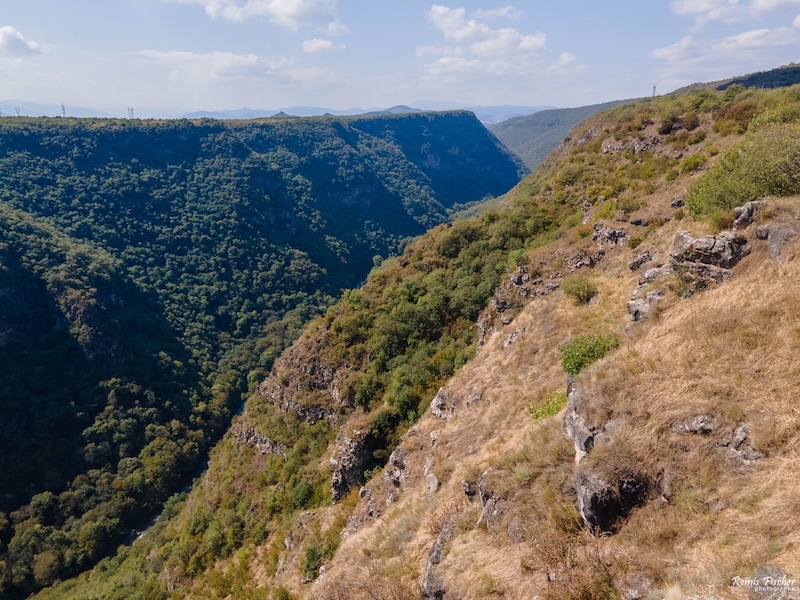
The full story of that first visit, including the short video from the rainy attempt, is in Samshvilde Canyon Hiking. We had already seen enough of the canyon to know that we wanted another go.
There was also an earlier detour in this general direction, back when we combined Birtvisi with an attempt to find Samshvilde. Hiking at Birtvisi Canyon is a useful reminder that the two places are near enough to belong in the same weekend conversation, but they do not feel like the same hike at all.
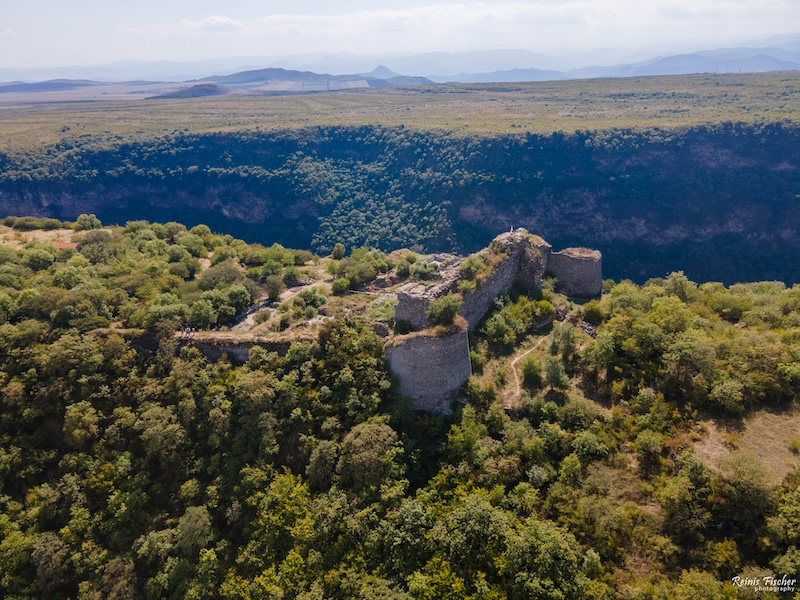
This time we finally found the fortress
On the second visit, the walk toward Samshvilde felt less like following a tourist route and more like approaching something that had been left in the landscape on purpose. The canyon opens around you, the slopes and cliffs start doing most of the talking, and the remains of the settlement do not arrive as one neat castle gate with a ticket booth beside it.
That was the part I liked most. Samshvilde does not give everything away at once. You walk through a large, quiet landscape and gradually understand that the ruins are spread across it. Walls, stone fragments and church remains make more sense as part of a former fortified town than as separate sights to tick off one by one.
The canyon also gave me another excuse to fly my DJI Mavic 2. I had flown it here during the previous visit too, and the cliffs and open landscape are still particularly interesting from the air.
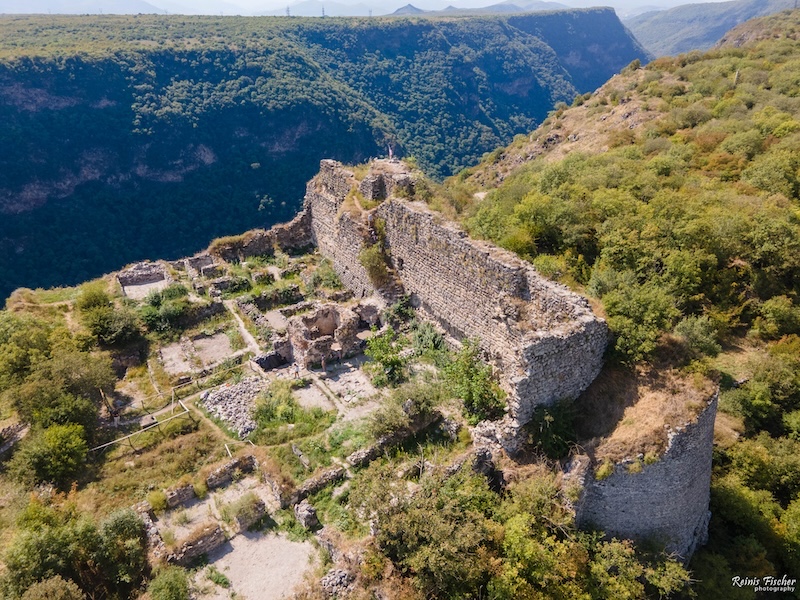
After last year’s failed attempt, finally reaching the fortress was satisfying in a very uncomplicated way. We had not discovered a new country or completed some heroic expedition. We had simply come back, followed the route properly this time, and reached the place that rain had kept from us before.
A little history of Samshvilde
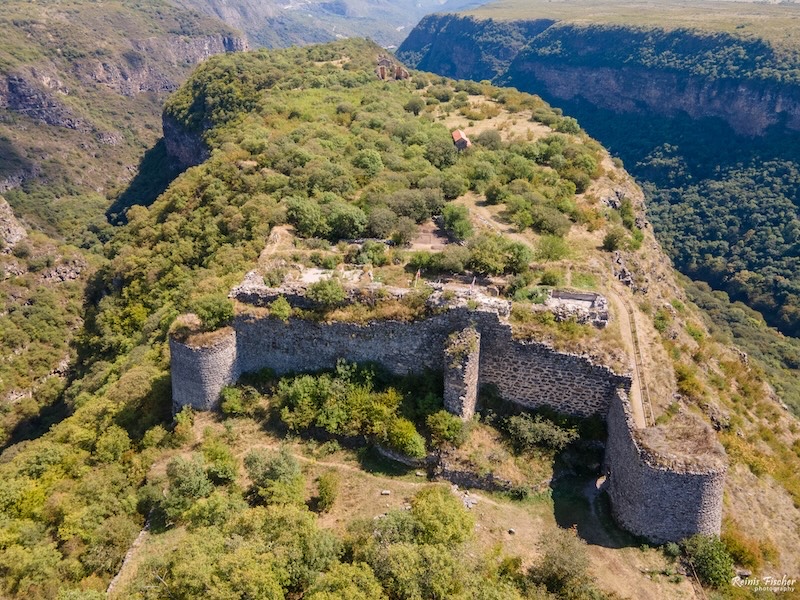
Samshvilde is much more than a single castle. It is the remains of a fortified settlement on a rocky cape between the Khrami and Chivchava river gorges in Kvemo Kartli. The setting explains a lot: steep sides gave the settlement strong natural protection, while the more open approach was defended by a substantial wall.
The site was inhabited long before the medieval ruins that are easiest to notice today. Archaeological work has found evidence of very early occupation in the area, while historical sources and later archaeology show Samshvilde becoming an important political and defensive centre in different periods of Georgian history. The surviving remains include fortifications, several ruined churches and traces of buildings spread over a large area.
Practical observations
For us, this was a car day trip from Tbilisi, and choosing the Kojori–Kiketi–Orbeti side made the journey part of the outing rather than a straight transfer. Samshvilde also rewards a little patience. It is not set up like a conventional tourist attraction, and the scale of the site is easier to appreciate once you stop expecting one obvious final destination.
Our first visit was a good reminder that weather can change the experience quickly. We did not need any complicated plan on the return, but remembering the previous approach and having a clear idea of where we were going made a real difference.
Bottom line
Samshvilde is exactly the sort of Georgia day trip I enjoy: close enough to Tbilisi to do without turning it into a full expedition, but remote enough to feel like a proper break from the city. It took us more than one attempt, but that probably made finally reaching the fortress more memorable than it would have been the first time around.
One small milestone: this is the first article on reinisfischer.com written purely by the Hermes agent. It did not do the hiking, but it has apparently become the blog’s travel writer.