During a recent trip to Dublin, I took my daughter for dinner at Papa John's. While waiting for the pizza, I did what I often do when visiting a familiar consumer business: I checked whether the company was publicly traded.
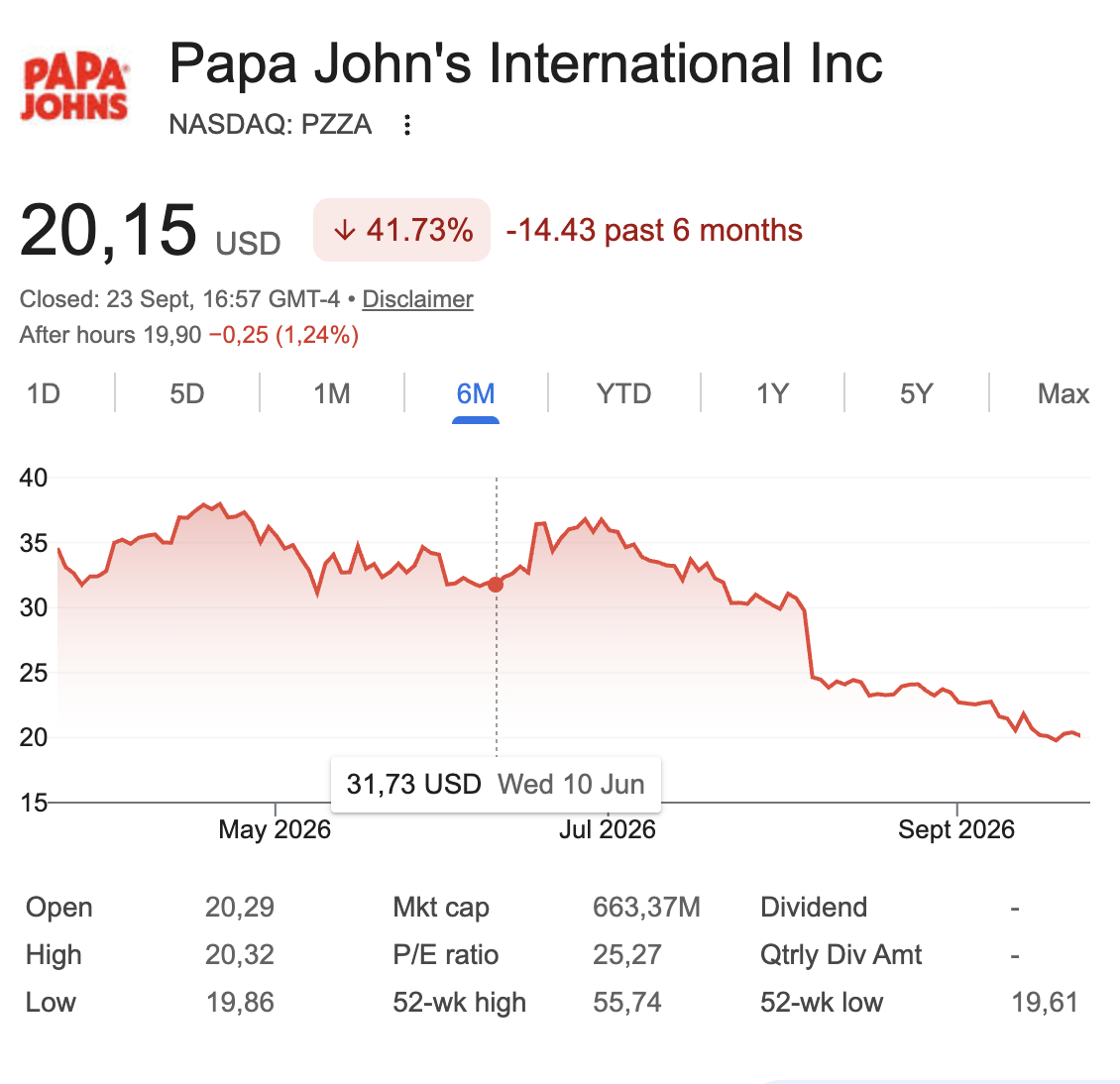
It turns out that Papa John's International trades under the ticker symbol PZZA.
After a quick look at the stock price, dividend history, and options chain, I decided to buy 0.5 shares for the long-term portfolio.
This was not a major investment decision, nor was it a recommendation. It was simply another small example of how everyday businesses can sometimes become investment ideas.
Why I Look at Businesses We Actually Use
One theme I have been thinking about more recently is the connection between consumption and ownership.
When we visit a company as customers, we usually think about the product, the price, and the overall experience.
Investors see an additional layer:
- Who owns the business?
- Is it profitable?
- Does it pay dividends?
- Is the stock optionable?
- Could it fit into a long-term portfolio?
I have used a similar approach with McDonald's, occasionally buying small amounts of MCD stock after family visits.
The point is not that every restaurant visit should become an investment. Rather, everyday life can sometimes produce useful observations about companies, brands, and consumer behavior.
What I Learned About Papa John's
Before this dinner, I had never seriously considered Papa John's as an investment.
I knew the brand and had seen its restaurants, but I had not looked closely at the company from an investor's perspective.
A quick review showed that Papa John's International is publicly traded under the ticker PZZA. The company operates in the global pizza delivery and restaurant market.
I also noticed that the company pays a dividend.
That immediately made the stock more interesting to me as a possible small, long-term portfolio addition.
Why I Bought Only 0.5 Shares
I bought 0.5 shares of PZZA.
The position is intentionally small because I do not yet know enough about the company to justify a larger allocation.
I had not reviewed its recent earnings in detail, compared it thoroughly with Domino's or other restaurant operators, or studied its debt, margins, valuation, and franchise economics.
For me, that distinction matters.
Buying a small fractional position is not the same as making a high-conviction investment. It is closer to placing the company on a personal watchlist while becoming a small owner.
Having even a small financial interest can make it easier to follow earnings, business developments, and long-term performance more closely.
Why I Did Not Sell Options on PZZA
PZZA is an optionable stock, with monthly contracts available.
In theory, an investor could sell cash-secured puts, write covered calls, or structure credit spreads.
However, I decided not to sell options on the stock. At least not yet.
The reason is simple: I do not understand the company well enough.
Just because a stock has an options chain does not mean it automatically belongs in an options income portfolio.
This is a mistake many options traders make. They find a ticker, see an attractive premium, and immediately begin building a trade without first understanding the underlying business or defining an adjustment plan.
I try to avoid that approach.
For options trading, especially in smaller accounts, I prefer companies where I understand the business, the stock's typical price behavior, the risks, and what I would do if the trade moved against me.
That is one reason I continue returning to more familiar positions such as NVDA and NFLX.
Ownership Before Options
With Papa John's, I decided that ownership should come before options.
A small stock position allows me to follow the company more closely without forcing an options trade.
Over time, I can monitor:
- earnings reports;
- dividend payments;
- stock price behavior;
- options liquidity;
- business performance;
- franchise trends.
If the company becomes more familiar and the options premiums eventually make sense, I may consider selling options on PZZA.
There is no urgency.
The broader principle is straightforward: start small, learn, and avoid forcing trades.
How This Fits My Portfolio Philosophy
My portfolio is not focused only on collecting options premium.
The broader objective is to build a long-term, income-oriented portfolio by combining:
- options selling;
- risk management;
- reinvestment of premium;
- fractional share purchases;
- gradual ownership in productive businesses.
Sometimes that means selling bull put spreads. Sometimes it means selling cash-secured puts. Sometimes it means writing covered calls against shares already held.
And sometimes it means doing nothing more than buying 0.5 shares of a company after a real-world observation.
In this case, I could have forced an options trade simply because PZZA has an options chain.
I chose not to.
Buying a small amount of stock was the more reasonable decision because it gave me exposure to the company without creating unnecessary complexity or risk.
Final Thoughts
The main takeaway is not that Papa John's stock is necessarily a buy.
The takeaway is that investment ideas can come from everyday life, but they still require discipline.
A business may be familiar. A stock may appear inexpensive. A dividend may look attractive. An options chain may exist.
None of those factors automatically makes it a good investment or a good trade.
For now, PZZA becomes a small long-term portfolio position and a company I plan to follow more closely.
The pizza was dinner.
The fractional share was a reminder that sometimes the best investment decision is not the most aggressive one. Sometimes it is simply becoming a small owner, learning more, and waiting before doing anything larger.
This article reflects personal investing observations and portfolio activity. It is provided for educational and informational purposes only and should not be considered investment advice, financial advice, tax advice, or a recommendation to buy or sell any security, option, derivative, or financial instrument. All investments involve risk, including the possible loss of principal.