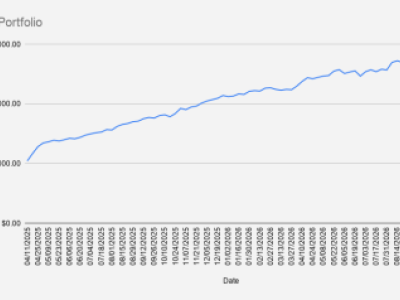
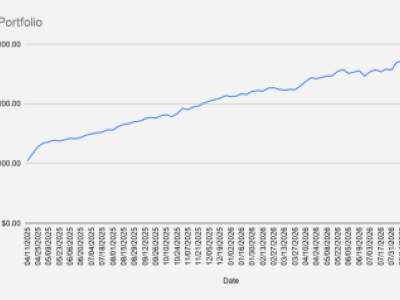
Portfolio Value: $11,211
Weekly Change: -1.16%
YTD Return: +8.00%
Options Premium Collected: $99.90
As of March 6, 2026, our options income portfolio was valued at $11,211, representing a weekly decline of -1.16%.
The decline was driven primarily by currency fluctuations rather than significant weakness in the underlying holdings. Because part of the portfolio reporting is sensitive to movements in the euro, the stronger U.S. dollar had a noticeable effect on the reported value. During the week, EUR/USD traded near 1.16 as the dollar strengthened against the euro.
Despite the weekly decline, the portfolio remained up 8.00% year to date. Over the same period, the S&P 500 was down approximately 1.59%, while NVDA had declined around 4.00%.
Managing a Challenged PFE Cash-Secured Put
The most significant portfolio adjustment this week involved the Pfizer (PFE) position.
Rather than waiting for the short put to move deeper into trouble, I decided to manage the trade proactively by rolling it to a later expiration date and a lower strike while still collecting a net credit.
One advantage of cash-secured puts is the flexibility they can provide when the underlying stock moves against the position. As long as the options remain sufficiently liquid, it may be possible to buy more time, reduce the strike, or both.
A roll does not eliminate the original loss. Economically, it closes the existing position and opens a new one. However, a carefully structured roll can improve the terms of the trade and provide additional time for the underlying stock to recover.
In this case, the additional premium generated by the adjustment was enough to fund the purchase of another 0.5 shares of PFE, bringing the total Pfizer position to approximately 1.5 shares.
The position remains small, but it contributes to the portfolio's growing dividend income and supports the broader strategy of converting options premium into productive long-term assets.
Current Options Positions
- NVDA March 13, 2026 167.5/157.5 bull put credit spread
- 2x BMY March 20, 2026 50/46 bull put credit spreads
- PFE May 15, 2026 $25 cash-secured put
- NVDA November 20, 2026 $120 covered call
The portfolio currently combines three primary options strategies:
- Bull put credit spreads
- Cash-secured puts
- Covered calls
Together, these strategies are intended to generate recurring premium income while allowing the portfolio to accumulate stocks and reduce debt over time.
Reinvesting Options Premium Into NVDA
In addition to increasing the PFE position, I used part of this week's options income to purchase another 0.1 shares of NVDA.
This remains one of the central principles behind the portfolio.
Rather than treating options premium purely as cash flow available for spending, I reinvest part of the income into companies I want to own over the long term.
Fractional purchases may look insignificant individually, but repeated consistently, they can gradually develop into meaningful stock positions.
$99.90 in Weekly Options Premium
The portfolio generated approximately $99.90 in options premium income this week.
For a portfolio of this size, that is a solid result and places the weekly income close to one of my longer-term objectives: consistently generating at least $100 per week from options.
That target should not be treated as guaranteed or pursued at any cost. Option premium is compensation for accepting risk, and forcing the portfolio to meet a fixed weekly target could lead to poor strike selection, excessive position sizing, or unnecessary leverage.
The priority remains balancing income generation with capital preservation.
Margin Debt Update
One of the portfolio's primary objectives remains reducing margin debt while preserving ownership of at least 100 NVDA shares.
At the time of writing, the margin balance stood at approximately -$3,686.
At an average rate of $100 per week, it would theoretically take around 37 weeks to generate an equivalent amount of premium income.
In practice, the calculation is not that simple. Weekly income will fluctuate, some trades may lose money, and part of the premium may be reinvested into stocks rather than used exclusively to repay debt.
Whether the margin balance can be eliminated during 2026 remains uncertain, but the overall objective is clear:
- Generate recurring options income
- Reduce margin debt gradually
- Preserve the core stock portfolio
- Avoid taking unnecessary risk
Why I Prefer Defined-Risk Credit Spreads
While I continue to use cash-secured puts when appropriate, much of the portfolio's weekly premium now comes from bull put credit spreads.
Compared with cash-secured puts, credit spreads generally require less buying power and establish a defined maximum loss when the trade is opened.
A bull put spread combines a short put with a lower-strike long put. The premium received is limited, but the protective put caps the downside risk of the position.
For a smaller portfolio, that capital efficiency can make a meaningful difference. It allows exposure to liquid, higher-priced stocks without committing enough capital to purchase 100 shares if a short put is assigned.
Defined risk does not mean low risk. A spread can still lose most or all of its maximum risk, especially if the underlying stock falls sharply or the position is held too close to expiration.
Looking Ahead
The main position to monitor next week is:
- NVDA March 13, 2026 167.5/157.5 bull put credit spread
If the trade comes under pressure, the management plan remains broadly unchanged:
- Consider rolling the position forward when the economics remain reasonable
- Prefer an adjustment that collects additional credit
- Avoid materially increasing the maximum portfolio risk
- Prioritize long-term stability over defending every individual trade
Rolling should not become automatic. Every roll closes one trade and creates another, often with a longer duration or a different risk profile. If the underlying thesis has changed, accepting a controlled loss may be more rational than repeatedly extending the position.
Key Takeaway
This week demonstrated that options premium can serve purposes beyond short-term cash flow.
By managing the challenged Pfizer position, collecting additional premium, and reinvesting part of the income into PFE and NVDA shares, the portfolio continued moving toward its broader objectives despite the currency-related decline in reported value.
Progress remains incremental, but sustainable portfolio growth is usually built through repeated small decisions rather than a single exceptional trade.
Disclaimer
This trade journal reflects personal portfolio activity and is provided for educational and informational purposes only. It should not be considered investment advice, financial advice, tax advice, or a recommendation to buy or sell any security, option, derivative, or other financial instrument.
Options trading involves substantial risk and may not be suitable for all investors. Rolling a position does not eliminate losses and can increase the duration, complexity, and capital requirements of a trade. Past performance does not guarantee future results.