Recently, after booking a trip to Ireland with Lufthansa, I found myself taking a closer look at the company's stock.
As I commented on LinkedIn:
"Another interesting European stock to play with is Lufthansa (LHA). After booking a trip to Ireland with them, I decided to sell some short put options on the stock. As long as it doesn't go belly up, right?"
While that comment was partly tongue-in-cheek, it reflects how many of my investment ideas start. Sometimes an everyday experience prompts me to look deeper into a company that wasn't previously on my radar.
That doesn't mean I buy stocks simply because I use their products or services. But becoming a customer often gives me a reason to examine a business more closely.
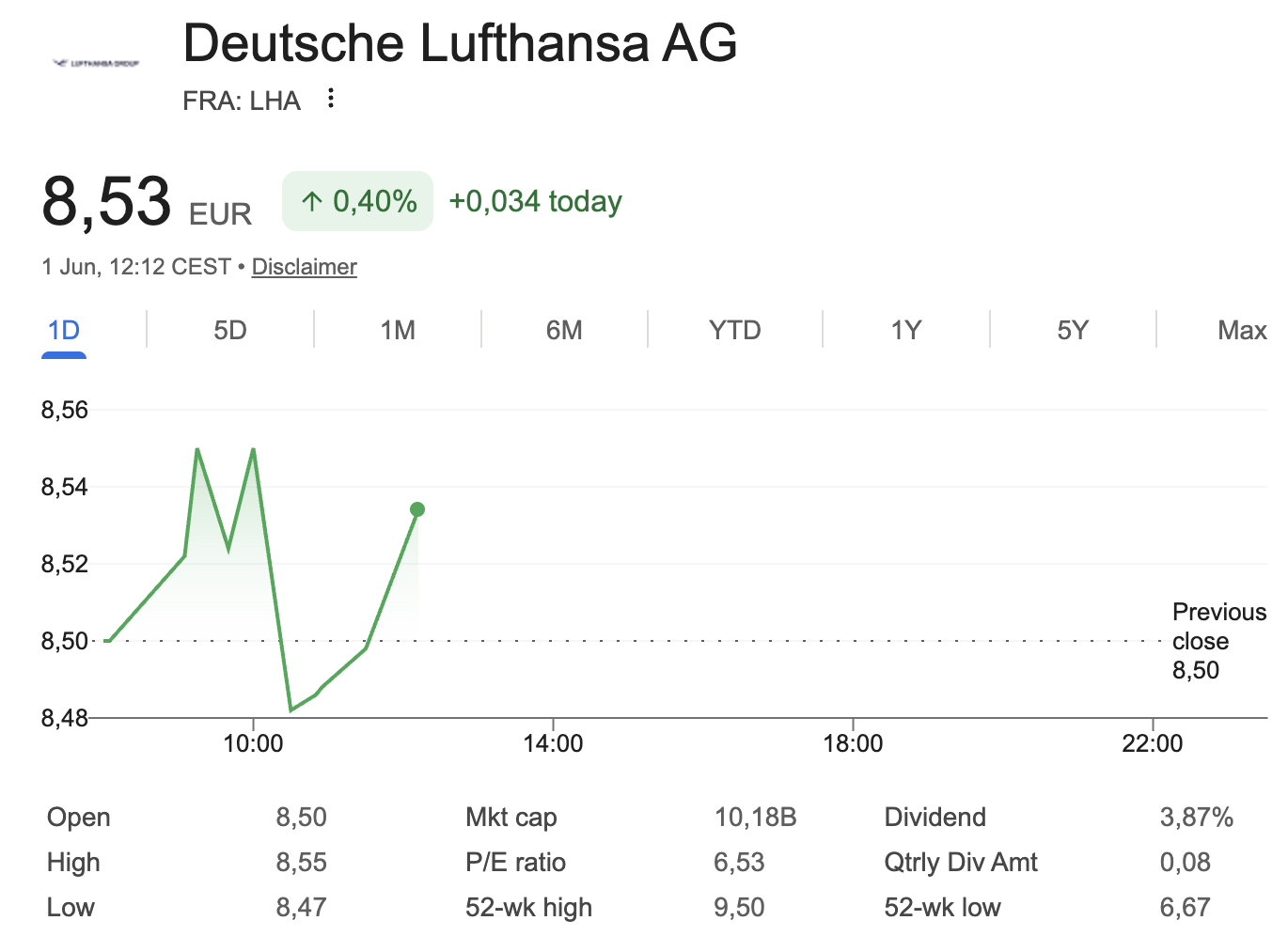
This time, that business was Deutsche Lufthansa AG (FRA: LHA).
The Trade
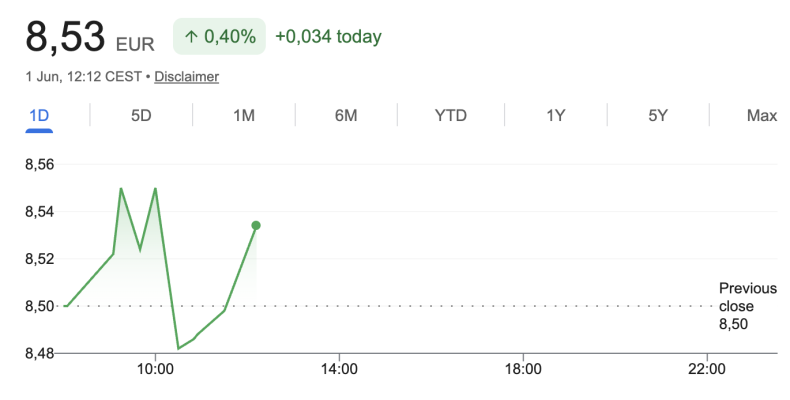
On June 1, 2026, Lufthansa shares were trading at approximately €8.53.
Instead of buying the stock outright, I sold a cash-secured put option with a strike price of €7.60 expiring on September 18, 2026.
For taking on this obligation, I collected €33 in option premium.
The numbers look quite interesting:
| Metric | Value |
|---|---|
| Stock Price | €8.53 |
| Put Strike | €7.60 |
| Premium Received | €33 |
| Expiration | September 18, 2026 |
| Days to Expiration | 109 |
| Capital Secured | €760 |
| Return on Capital | 4.34% |
| Annualized Return | ~14.5% |
| Breakeven Price | €7.27 |
In other words, Lufthansa shares could decline almost 15% from their current level before I would start losing money at expiration.
If the stock remains above €7.60, the option expires worthless and I keep the full premium.
If the shares fall below the strike price and I get assigned, I would effectively acquire Lufthansa stock at €7.27 per share after accounting for the premium received.
That's a price level where I would be comfortable becoming a shareholder.
Why Sell a Put Instead of Buying the Stock?
One of my favorite options strategies is selling puts on companies I wouldn't mind owning at lower prices.
Many investors focus entirely on predicting whether a stock will go up or down. I prefer looking at probabilities.
By selling a put option, I'm essentially getting paid for agreeing to buy shares at a lower price in the future.
There are only two outcomes:
- The stock stays above the strike price and I keep the premium.
- The stock falls below the strike price and I acquire shares at a discounted effective price.
Of course, there is always a third possibility: the stock collapses far below the strike price, generating losses. That's the risk every put seller accepts.
Airlines Are Not Easy Businesses
Let's be honest: airlines are not the strongest businesses in the world. The industry is extremely sensitive to external shocks. A recession can reduce travel demand. Fuel prices can spike unexpectedly. Geopolitical conflicts can disrupt routes and increase costs. Strikes can impact operations.
And as the COVID-19 pandemic demonstrated, travel demand can disappear almost overnight. Airlines often operate on relatively thin margins even during good times. That's why airline stocks tend to experience greater volatility than many other sectors.
Investors considering airlines need to accept that these businesses can be profitable for years and then suddenly face severe challenges due to events outside management's control.
My Investment Thesis Is Actually Quite Simple
I'm not necessarily bullish on airlines as a sector. I don't expect Lufthansa to become the next Nvidia. I'm not forecasting explosive earnings growth. My thesis is much simpler. I believe there is a reasonable probability that Lufthansa will remain a functioning airline and that its stock will stay above €7.60 over the next few months.
That's enough for this trade to work.
Options trading doesn't always require predicting huge moves. Sometimes it simply requires identifying situations where the market may be paying a reasonable premium relative to the risks being assumed.
Lufthansa Becomes the Second German Stock in My Portfolio
Interestingly, Lufthansa is only the second German stock that currently plays an active role in my portfolio. The first is Deutsche Bank.
And if I'm being completely transparent, my involvement with Deutsche Bank also started somewhat emotionally rather than through a highly sophisticated screening process. During a visit to Berlin in April, I found myself looking at Deutsche Bank shares and eventually selling options on the stock.
The funny thing is that some of my better investment ideas have started this way. Not because I blindly follow emotions, but because personal experiences often draw my attention toward companies I might otherwise ignore.
The actual investment decision still comes later, after looking at the numbers and evaluating whether the risk-reward relationship makes sense.
Why I Like Trading European Stocks
Many retail options traders focus almost exclusively on U.S. stocks. I trade American equities as well, but from time to time I specifically look for opportunities in Europe. As a European investor, euro-denominated assets offer several advantages.
There is no need to worry about EUR/USD currency fluctuations. The companies are often more familiar. The macroeconomic environment is easier to follow. And perhaps most importantly, European positions provide diversification away from a portfolio that might otherwise become overly concentrated in U.S. markets.
Liquidity is usually lower than on American exchanges, but opportunities still exist for patient investors.
Final Thoughts
Will Lufthansa outperform the market over the next decade? I have no idea.
Will airlines continue to face cyclical risks and unpredictable shocks? Absolutely.
But investing is rarely about certainty.
This particular trade generated a potential annualized return of approximately 14.5% while giving me exposure to a company I wouldn't mind owning at a lower price.
For me, that's a reasonable risk-reward proposition.
And if Lufthansa remains above €7.60 through September 18, 2026, I'll happily keep the premium and move on to the next trade.
Sometimes investing doesn't need to be more complicated than that.