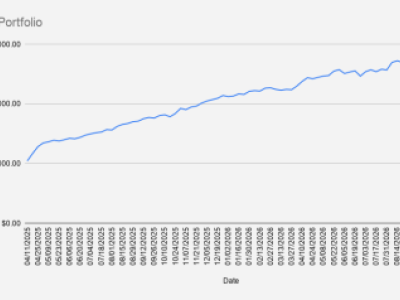
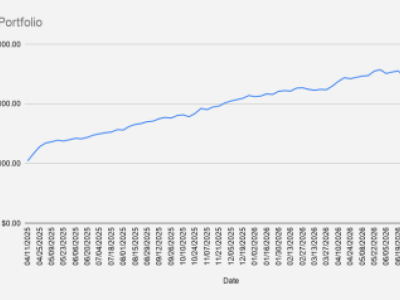
Over the years, I've tried to reduce unnecessary spending and make more intentional financial decisions. At the same time, my wife and I try to maintain an active and relatively healthy lifestyle while encouraging the same habits in our daughter. Of course, children are still children.
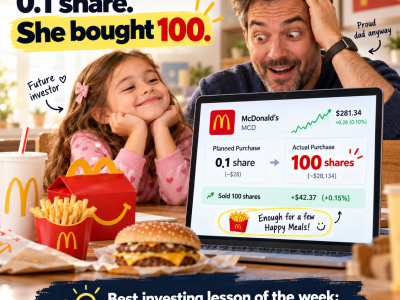
While we generally prefer home-cooked meals, outdoor activities, and healthier food choices, we still visit McDonald's occasionally or order food for delivery from time to time.
In our household, McDonald's is more of an occasional treat than a regular habit. That eventually led me to create a simple investing rule.
Turning Consumption Into Ownership
Whenever we visit McDonald's, I often buy a small amount of McDonald's stock. Usually, it is just 0.1 shares. The amount itself is not particularly important. The habit is.
After spending the day exploring Dublin, we ended up at a McDonald's restaurant. Afterwards, I added another 0.1 shares of McDonald's stock to my long-term portfolio.
This was not a major investment decision. I did not spend hours analyzing earnings reports or building valuation models. Instead, it was another small step in a habit I have followed for several years.
Teaching Investing Through Everyday Experiences
One of the investing lessons I am trying to teach my daughter is that consumers can also become owners.
Most people interact with businesses every day without thinking about who owns them. Investors tend to look at those same businesses differently.
When you own shares in a company, even a small fraction of one share, your perspective changes. Instead of simply spending money at a business, you also participate in its future success.
McDonald's provides an easy example.
Whether we are in Latvia, Germany, Ireland, or elsewhere, the golden arches are usually nearby. Millions of people visit McDonald's restaurants every day. The business is familiar, easy to understand, and visible almost everywhere.
For teaching basic investing concepts, that familiarity is valuable.
The €4 Strawberry Drink Observation
One thing that stood out during our recent visit was the price of a strawberry-flavored drink. It cost more than €4.
Interestingly, the drink cost more than a latte. I could not help thinking about the economics behind it. The ingredients themselves likely cost relatively little compared with the final selling price, yet customers continue buying these products.
That is not a criticism. It is simply an observation.
McDonald's appears to be adapting to changing consumer preferences by offering products with attractive margins and broad appeal.
Whether it is specialty coffee, desserts, or sweet beverages, the company seems willing to follow consumer trends, and customers appear willing to pay for them.
From an investor's perspective, that can be an encouraging sign.
Am I Bullish on McDonald's?
Not particularly.
I am not aggressively buying McDonald's stock, making a prediction about its future share price, or suggesting that others should buy it.
In fact, I spend considerably less time analyzing McDonald's than some of the companies used in my options portfolio.
What I do believe is that McDonald's has demonstrated remarkable durability as a business.
The company has survived recessions, inflationary periods, changing consumer preferences, and decades of competition. For a long-term investor, that matters.
What About Options?
McDonald's is an optionable stock.
Investors can use strategies such as:
- Covered calls
- Cash-secured puts
There are certainly traders who use MCD for these purposes.
Personally, I do not consider McDonald's one of my preferred options-trading stocks. Most of my options activity focuses on companies such as NVIDIA and other positions where option premiums tend to be more attractive.
Still, it is useful to know that options are available should I eventually decide to build a larger position.
Building a Position One Fractional Share at a Time
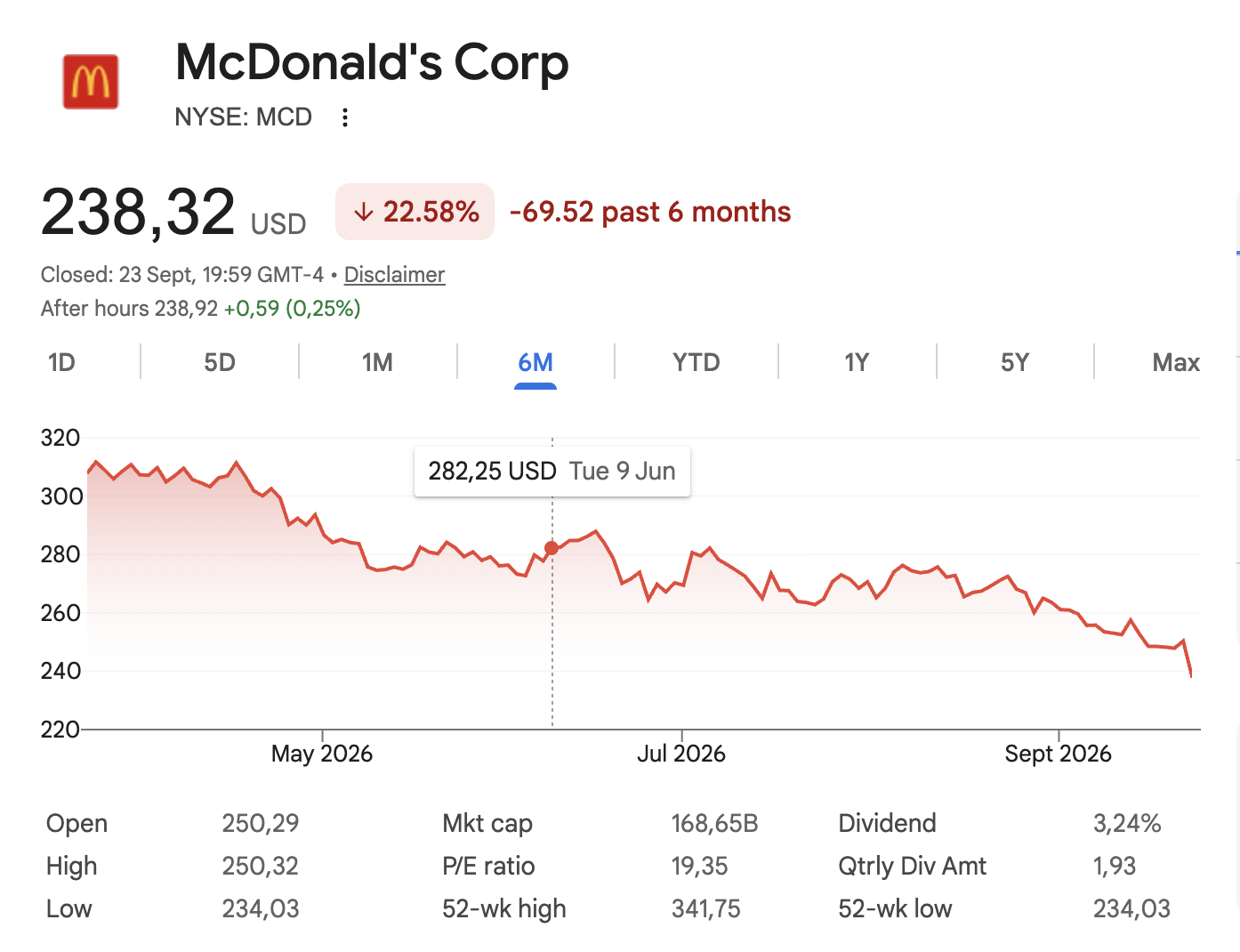
Over the past few years, these small purchases have accumulated into approximately 4.5 shares of McDonald's stock.
That is obviously nowhere near the 100 shares required to write a standard covered call.
At the current pace, reaching that milestone could take many years. But that is not really the point.
The purpose is not to build a covered call position. The purpose is to slowly accumulate ownership in established businesses.
Every fractional share contributes to the portfolio. Every dividend contributes to future growth. Every purchase also reinforces the habit of thinking like an owner.
Small Purchases Can Become Meaningful Over Time
One of the themes I have been exploring recently is using investment income to gradually acquire productive assets.
In some cases, I use options premium to purchase fractional shares of companies already held in the portfolio. At other times, I simply add small amounts when an opportunity presents itself.
McDonald's fits naturally into that approach.
The position is small, and the purchases are infrequent. However, they serve as a reminder that investing does not always need to involve complicated forecasts, large transactions, or precise market predictions.
Sometimes, investing starts with paying closer attention to the businesses we interact with every day.
Final Thoughts
Will buying 0.1 shares of McDonald's after each visit make me wealthy? Probably not.
But that is not the objective.
The objective is to create a connection between spending and ownership.
It is a simple habit that encourages long-term thinking, reinforces basic investing principles, and creates opportunities to teach those ideas to the next generation.
For now, every occasional visit to McDonald's adds another small piece to the portfolio.
The position itself remains modest, but the lesson behind it may prove far more valuable over time.
This article reflects personal investing habits and observations and is provided for educational and informational purposes only. It should not be considered investment advice, a recommendation to buy or sell securities, or a prediction of future performance. All investments involve risk, including the potential loss of principal.