We arrived in Mestia in September 2026 and checked in at Hotel Posta. Vazha was travelling with us, which made a bigger difference than it might sound. With our own driver, we were not limited to walking around Mestia or ticking off only the obvious stops. We could look at the day, look at the road, and decide to go somewhere else.
That is how we ended up heading towards Chalaadi Glacier.
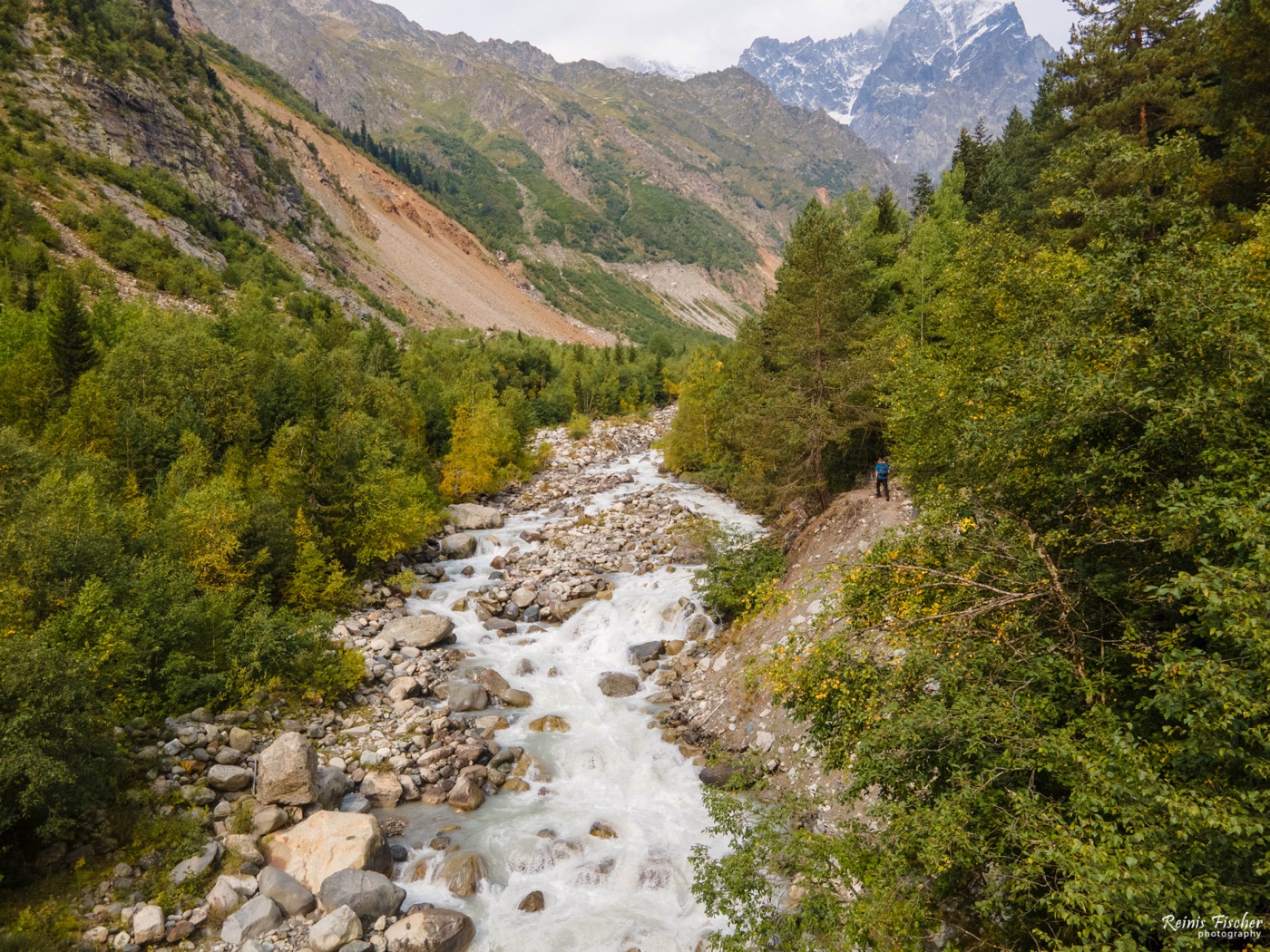
I had done quite a few hikes and road trips around Georgia over the years, but this became one of the more interesting hikes for me. Not because it was the longest or hardest, but because the route changes character quite quickly: road access out of Mestia, a river valley, forest, rougher moraine, and then the glacier at the end of it all.
How We Ended Up at Chalaadi Glacier
Chalaadi was not some secret discovery. It is an established hiking destination near Mestia, and there were plenty of other people going there that day. Still, it was one of the less-planned parts of our Svaneti trip, which often turns out to be a good way to travel in Georgia.
Having Vazha with us meant we could use the time for the route itself instead of making the day entirely about getting to the start. That flexibility was also part of what I liked about our earlier Svaneti road trip with Vazha: the road between places is often as much part of the day as the destination.
From Mestia, the route follows the Mestiachala valley towards the glacier. Chalaadi is also commonly written *Chalaati* in Georgian tourism and scientific material; I am using “Chalaadi” here because that spelling is widely used in English-language trail information around Mestia.
Hiking to Chalaadi Glacier
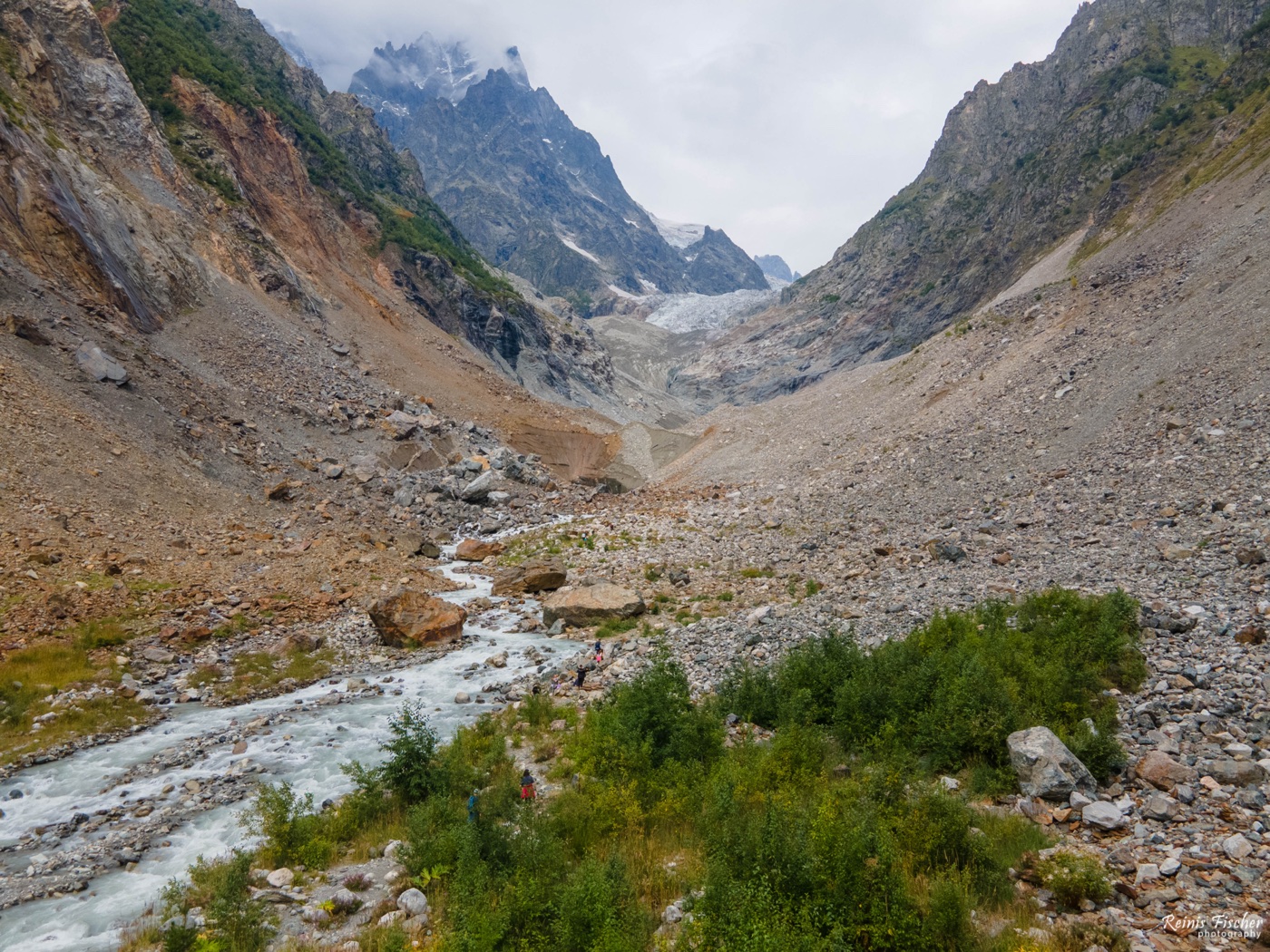
The walk did not feel particularly difficult to us, but it was not a city park walk either. The first part was straightforward enough to settle into a normal pace and enjoy the valley. Closer to the glacier, the ground became rougher and rockier, so we slowed down and watched our footing more carefully.
That final change in terrain is what makes sensible footwear matter. It is not a technical climb, but loose or uneven rocks are different from a flat forest path. We saw plenty of people treating the walk seriously, with proper hiking shoes and poles, while others were simply taking their time, stopping for photos and enjoying the landscape.
The route was busy in a good way. We met travellers from many countries, which was no surprise given how accessible Chalaadi is from Mestia. Some looked as if they were working through a much bigger hiking itinerary; others had come for a half-day outing from town. A few conversations around us turned to glaciers, climate change and how far the ice has retreated. It is the sort of place where that topic comes up naturally.
We were in no rush either. We stopped a few times for small picnics along the route, and with the valley around us even a simple food break felt pretty spectacular.
Hiking Chalaadi Glacier With an 8-Year-Old
The part I probably enjoyed most was seeing our eight-year-old daughter make it all the way there. She handled the route better than I expected, and yes, I was genuinely proud of her.
At one point she found herself a simple walking stick, which quickly became her hiking equipment for the day.
That said, I would not turn our experience into a blanket promise that Chalaadi is easy for every child. Our daughter completed it in the conditions we had, with our pace and with an adult group around her. Families should still judge the weather, the trail surface, footwear, river conditions and their own child’s confidence on uneven ground. The rocky final section deserves more attention than the first forest kilometres.
For us, the hike was manageable without rushing. For someone starting from Mestia on foot rather than using transport to the trailhead, or hiking after rain, it can feel like a different outing.
Travellers From Everywhere
One small detail that stayed with me was the number of trekking poles on the trail. Many hikers had them, and they looked useful on the rougher or rockier sections, especially when coming back down.
We did not use poles and managed perfectly well without them. I would call them useful rather than necessary. If you already hike with poles, Chalaadi is a reasonable place to bring them. If you do not, good shoes, a steady pace and paying attention to the surface were enough for us.
It had a nice mix of people: serious hikers, families, solo travellers and groups who were just out for the day. That mix made the route feel social without taking away from the fact that you are walking up a cold mountain valley towards a real glacier.
Drone Photography in the Valley
I spent quite a bit of time flying the drone here. Drone photography has become my type of therapy: send the drone up and see the valley from another angle.
The Glacier and Its Retreat
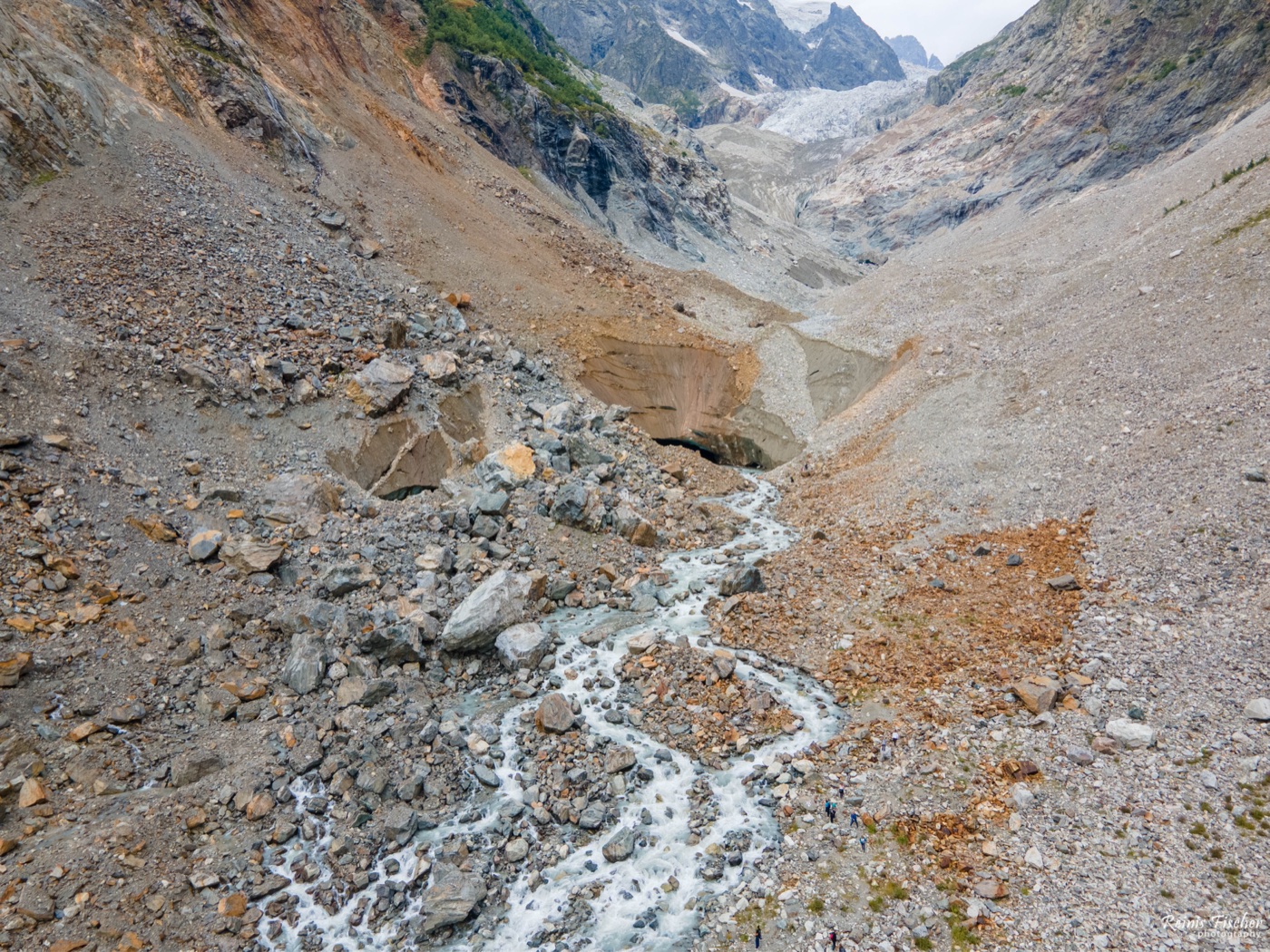
Chalaadi lies at the head of the Mestiachala, a right tributary of the Mulkhuri River. It is fed by streams from the Ushba, Chatini, Bzhdukhi and Dalakori area. Local Svaneti tourism information places the glacier tongue at about 1,850 metres above sea level and notes that the glacier descends into the forest zone.
The ice is not a fixed landmark. Research by Levan Tielidze and co-authors reconstructed changes since the Little Ice Age and found that Chalaati Glacier lost about 34% of its area between 1810 and 2018, decreasing from 14.9 to 9.9 square kilometres. Over the same period, its length shortened by about 2.3 kilometres.
Those are long-term figures, not something a visitor can measure in an afternoon. But standing in the valley, with moraine and loose rock between the path and the ice, makes the idea of retreat less abstract than a number on a screen.
The official safety advice is simple and worth following: view the glacier from a safe distance. Ice can break away and rockfall is common near the tongue; avoid going close to the ice, and do not set out in rainy or foggy weather.
Is Chalaadi Glacier Worth Visiting?
For us, yes.
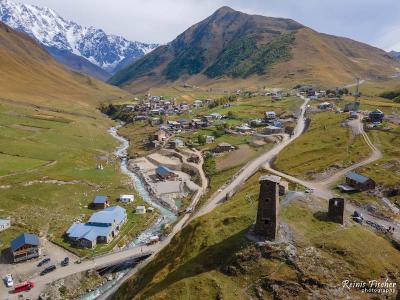
It gave us something different from walking around Mestia or driving towards Ushguli. Ushguli has its towers, altitude and long road approach; Chalaadi gives you a valley walk ending at the glacier itself. Both belong in a Svaneti trip, but they are different days.
Chalaadi also worked because it did not require a grand expedition. We could make a family outing of it, take our time, and still finish with the feeling that we had gone somewhere properly mountainous. That is not always easy to arrange when travelling with a child.
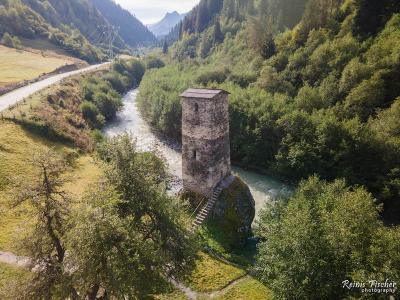
If you are already exploring Svaneti by car, it also fits naturally alongside stops such as the Tower of Love on the Mestia–Ushguli road. And if your trip continues back through western Georgia, our stop at the Ophitara Three Cascade Waterfall was another reminder that the return journey does not need to be only a drive home.
Practical Notes for the Chalaadi Glacier Hike
Starting point: The short standard approach begins after driving up the Mestiachala valley. Svaneti’s local tourism site says Chalaadi is about 15 km from Mestia and that an off-road vehicle can cover roughly 12 km, leaving a 3 km one-way hike.
Distance and time: From that trailhead, allow about 6 km return. The local source describes it as an easy route, climbing from about 1,670 m to 1,950 m; the first 2 km are through forest and the last kilometre is rocky. Published totals vary because some guides count the approach from Mestia rather than the drive to the trailhead. Georgia Travel describes a longer 16 km, four-to-six-hour round trip from Mestia.
Difficulty: Our experience was that it was not particularly difficult, but the last section is uneven. Treat it as a short mountain hike, not as a guaranteed easy walk for every fitness level or child.
Footwear: Wear shoes with grip. The rocky section close to the glacier is the part where that pays off most.
Trekking poles: Optional. We did not use them and were fine, but they looked helpful to many hikers on the rougher ground.
Children: An eight-year-old in our group completed the hike, but that is a personal experience, not a universal age recommendation. Go at the child’s pace and turn back if conditions or confidence are not right.
Weather and glacier safety: Do not approach the ice tongue. Check conditions on the day, avoid rain or fog, and keep clear of places exposed to falling ice or rock.
Transport: A driver, taxi or suitable vehicle makes the short route much more practical. Walking all the way from Mestia adds distance and changes the effort. -
Season: The local tourism source does not specify a season. In practice, plan only when the route and road access are open and conditions are suitable; confirm locally in Mestia before leaving.
For more Georgia hiking ideas after Svaneti, see our Samshvilde Canyon hike and the older Birtvisi Canyon hiking route. They are very different landscapes, but each is a good reminder that a short drive can lead to a completely different day out.
Final Thoughts
Chalaadi Glacier was one of those places that worked because we did not over-plan it. We had arrived in Mestia, we had Vazha with us, and we had the freedom to see what else the valley offered.
The hike was not a test of endurance for us. It was a real walk through changing terrain, with people from all over the world on the trail, a cold glacier at the end, and a small family moment when our daughter reached it too.
That combination made Chalaadi one of the more interesting hikes I have done in Georgia.