On March 7, 2026, I opened a short-duration buy-write covered call position on Ethereum. The trade was structured primarily for premium collection, not for capital appreciation.
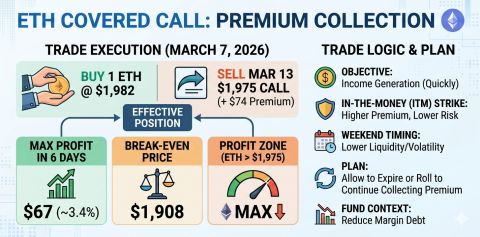
I bought 1 ETH at $1,982 and simultaneously sold a March 13 call option with a $1,975 strike, collecting $74 in premium. The option was slightly in the money, which helped increase the premium collected and lowered the effective risk of the position.
The objective of this trade is simple: generate income quickly. As long as ETH remains above the strike price at expiration, the position should realize its maximum profit in just six days. Because the strike is below my purchase price, part of the premium offsets that difference. After accounting for this, the trade’s maximum profit is $67, which represents roughly 3.4% return on the $1,982 position over six days.
The collected premium also reduces my effective cost basis on the ETH. After the $74 premium, my break-even price drops to $1,908, meaning ETH could fall about 3.7% before the position begins losing money.
If returns like this were hypothetically repeated throughout the year, the annualized yield would exceed 200%, though in reality such consistency is unlikely. Premium levels, volatility, and market direction all change constantly. Still, short-dated option selling can generate meaningful income when managed carefully.
One interesting detail about this trade is the timing. I opened the position on a Saturday, which is generally not the best moment to sell options. Even though crypto markets operate 24 hours a day, seven days a week, options markets still behave somewhat like traditional financial markets. Liquidity and volatility tend to be lower on weekends, which often compresses option premiums. Most volatility expansion typically occurs during Monday through Friday trading hours, when global markets are most active.
The trade plan is straightforward. Ideally the position will simply run to expiration and the premium will be realized. If the trade behaves as expected, the profit will be taken and the premium will help reduce margin debt in the portfolio. Managing margin exposure is currently an important priority for the fund.
If ETH drops below the break-even level, the intention would be to roll the option forward and continue collecting premium until the position can eventually be closed profitably.
From a long-term perspective I am comfortable holding ETH. Personally I lean strongly toward the Ethereum side of the crypto ecosystem, so owning the asset itself is not a problem. However, because the fund currently carries negative margin debt, keeping capital tied up in spot positions indefinitely is not ideal. The preference is to generate income quickly and recycle capital, rather than sit on long-term holdings.
This trade therefore reflects a pragmatic approach: use short-dated covered calls to extract premium from volatility, while gradually improving the portfolio’s leverage situation.