Selling naked puts on dividend stocks is one of my favorite ways to generate income. I’ve been selling options since the end of March 2019. As a dividend investor, I find options one of the best inventions of our time.
Income from options regularly puts food on our family table, or at least buys some candy. I sell puts and calls, trade vertical spreads on the S&P 500 (SPX), and trade gold futures and other instruments. Most importantly, I have a lot of fun doing it.
I recently read an article about selling puts on Microsoft, BP, and XLF to generate $1,000 a month. The author estimated it would take about $46,100 to collect $1,020 in premium, or about 2.21% for the month.
I decided to try the same approach using three stocks I hold in our portfolio: AT&T, Pfizer, and Cisco Systems. Their dividend schedules help spread the income across the year.
Selling puts on AT&T (T)
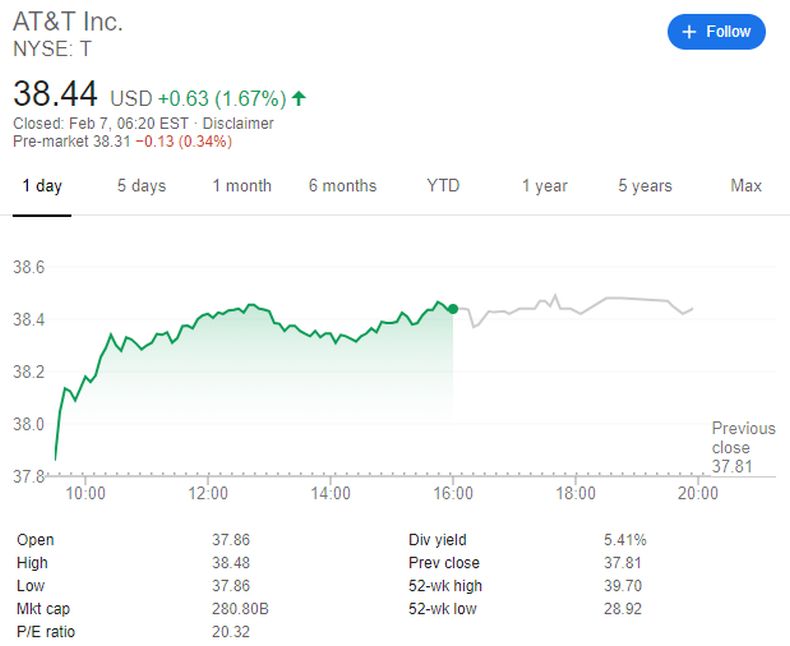
AT&T is probably my favorite stock to sell options on. It’s in the S&P 500, it had raised its dividend for 34 consecutive years, and its dividend yield was among the highest in the index.
I’ve been selling puts on it since March or April 2019. I also hold the stock in my dividend portfolio, where it contributes a little income in February, May, August, and November.
In this example, a March 6 put with a $38 strike was quoted at about $0.49 per share. That’s $49 per contract, or about 1.28% against the $3,800 purchase obligation in less than 30 days. My simple annualized estimate was 15.36%. The break-even price was $37.51.
If AT&T finishes above $38 at expiration, I keep the premium and can decide whether to sell another one. Below the strike, I’d generally expect assignment if I still held the position at expiry. I could close or roll the put before assignment, or take the shares, collect dividends if declared, and consider selling covered calls. One contract represents 100 shares, so assignment at $38 requires $3,800 before the premium.
Selling puts on Pfizer (PFE)
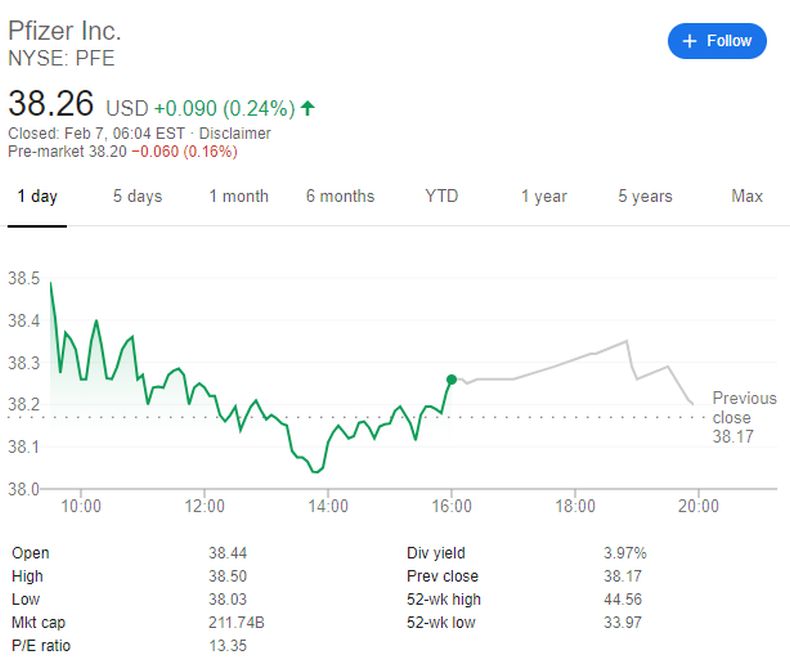
Like AT&T, Pfizer is in the S&P 500. It was also in the Dow Jones Industrial Average and on the Dogs of the Dow list. Its dividend yield was above 3%, and it had raised the dividend for nine consecutive years.
Pfizer is one of the latest additions to our dividend portfolio. I started buying it for what I call the Partnership Fund. In practice, that means buying Pfizer stock once a month for my better half.
I’ve been selling puts on Pfizer since January 2020. It also contributes to our dividend income in March, June, September, and December.
A March 6 Pfizer put with a $38 strike was quoted at about $0.68 per share. That’s $68 per contract, or about 1.78% against a $3,800 purchase obligation in less than 30 days. My simple annualized estimate was 21.36%. The break-even price was $37.42.
Above $38 at expiration, the put would expire worthless. Below $38, I’d generally expect assignment if the position remained open. A roll is another trade, with its own cost and risk. If I take assignment, I need $3,800 to buy the 100 shares before counting the premium.
Selling puts on Cisco Systems (CSCO)
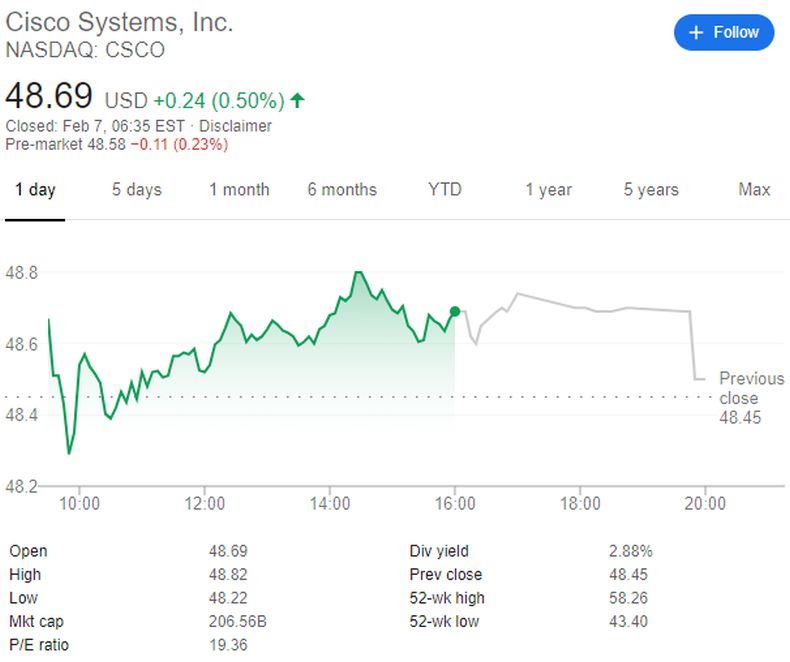
Cisco Systems is also in the S&P 500 and the Dow. Like Pfizer, it was on the Dogs of the Dow list. The yield was just under 2%. I’d have liked a little more, but selling puts and calls gave me another way to earn income from the same stock. Cisco had also increased its dividend for nine consecutive years.
I’ve been adding Cisco to our dividend portfolio since January 2020. We expected those payments to contribute to our income in January, April, July, and November.
A March 6 put at the $48 strike was quoted at about $1.21 per share. That’s $121 per contract, or about 2.52% against the $4,800 purchase obligation in less than 30 days. My simple annualized estimate was 30.24%. The break-even price was $46.79.
If Cisco finished above $48, I could keep the premium and decide whether to write another put. Below $48, I’d generally expect assignment on an open position at expiration. Taking assignment would mean buying 100 shares for $4,800 before counting the premium.
What the three examples add up to
The three quoted premiums add up to $238 against $12,400 in possible stock purchases. That’s about 1.9% for the period. The simple annualized figure of roughly 22.8% assumes I could repeat that result month after month.
For comparison, my 2020 estimates for owning 100 shares each were $208 in annual dividends from AT&T, $152 from Pfizer, and $140 from Cisco. That’s $500 before tax, or about 4% against $12,400. The put premiums cover one set of trades, while those dividends were estimated for a whole year. The stock price can fall well below the break-even price, and a put can be assigned before expiration.
If I’m already holding the shares for dividends, I can also look at selling covered calls. That’s a subject for another article.