We first visited Galle Fort and Galle city at the start of January 2022, during our 11 day trip to Sri Lanka. We arrived here by a taxi from our hotel in Beruwala (Cinnamon Bey Beruwala Hotel)
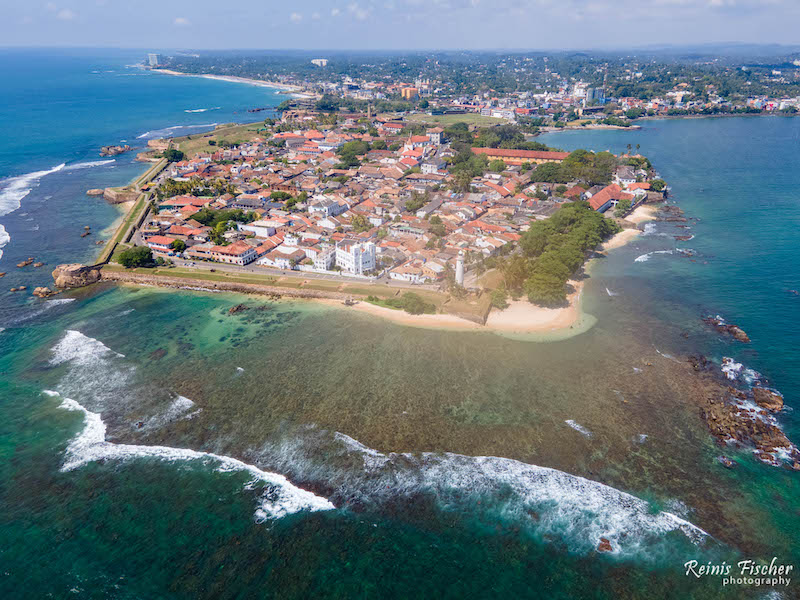
The fort has a colourful history, and today has a multi-ethnic and multi-religious population. The Sri Lankan government and many Dutch people who still own some of the properties inside the fort are looking at making this one of the modern wonders of the world.
The heritage value of the fort has been recognized by the UNESCO and the site has been inscribed as a cultural heritage UNESCO World Heritage Site under criteria iv, for its unique exposition of "an urban ensemble which illustrates the interaction of European architecture and South Asian traditions from the 16th to the 19th centuries."
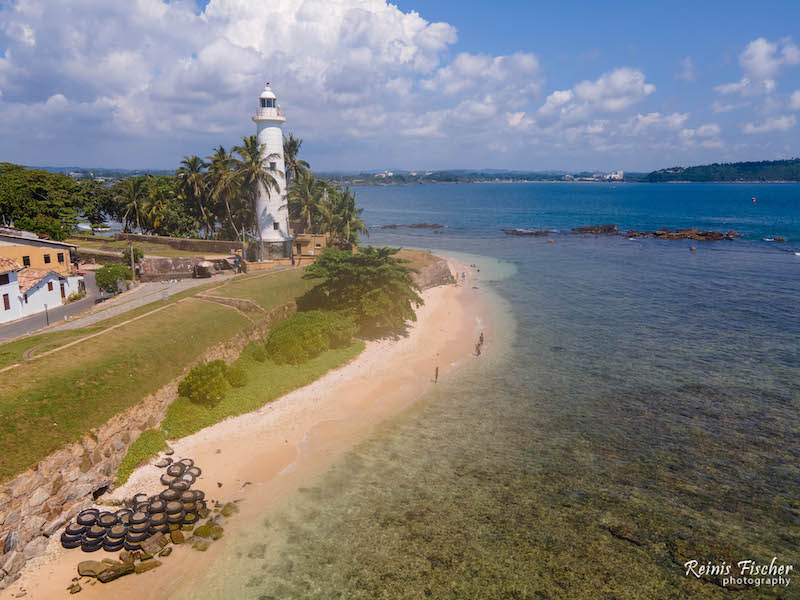
The Galle Fort, also known as the Dutch Fort or the "Ramparts of Galle", withstood the Boxing Day tsunami which damaged part of coastal area Galle town. It has been since restored.
The 18 metres (59 ft) high Galle Lighthouse was erected here in 1938. The next stretch of the fort wall is the location of Flag Rock Bastion, which was used as a signaling station to warn ships entering the port of the hazardous rocky stretches of the bay. Ships were warned by firing musket shots from the Pigeon Island near the flag rock. Further along the fort walls is the Trion Bastion where a windmill drew water from the sea to sprinkle the dusty roads of the town; it is also a view point to watch sunsets. Many more bastions are seen along the fortifications from this location up to the Main Gate.